“How much does Audi servicing cost in Singapore?”
It’s the second most common message we get on WhatsApp, right after the BMW version of the same question. And just like with BMW, the answer most people get, whether from the dealer or from a vague Google result, isn’t that useful. Either it’s missing the model detail that actually drives the price, or it’s quoting figures from three years ago.
This guide covers what Audi servicing actually costs in Singapore in 2026. Oil service, major service, brakes, the jobs everyone skips, and the ones that quietly turn into expensive failures. Dealer prices and independent prices, side by side, for the models you’re most likely to own: the A4, A5, Q5, and Q7.
The short answer
A standard Audi oil service at a Singapore main dealer runs S$450–S$650. At a reputable independent Audi specialist, the same job costs S$260–S$380. A major service (spark plugs, air filter, cabin filter, brake fluid) is S$1,200–S$1,800 at the dealer and S$820–S$1,150 independent.
Most Audi owners save 30–40% on labour and 20–30% on parts by switching to an independent specialist, and the warranty stays valid.
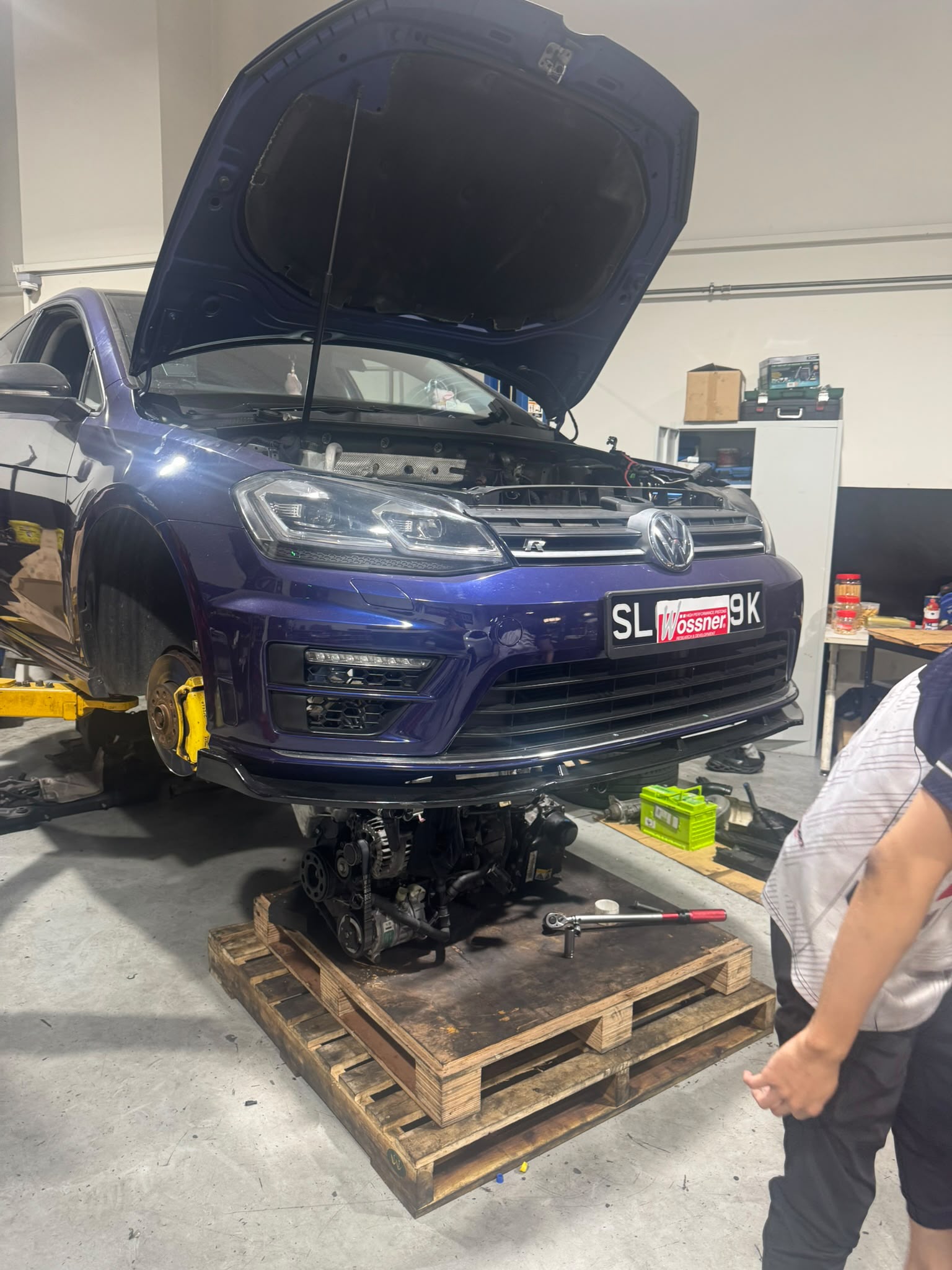
Audi oil service cost (the one every owner needs)
Audi calls this the “Oil Change Service”. It covers engine oil, oil filter, basic inspection, and a service interval reset via VCDS or ODIS. Recommended every 15,000km or 12 months, whichever comes first.
Dealer price: S$450–S$650 depending on model
Independent: S$260–S$380
The price range comes down to two things. Engine size: a 2.0 TFSI (EA888) takes roughly 4.5–5 litres of oil. A 3.0 TFSI V6 in the Q7 or S-line models takes 8–9 litres. Oil specification also matters: Audi requires VW 502.00 or 504.00 spec for most TFSI engines. Castrol Edge or Mobil 1 in those approvals runs around S$14–17 per litre. Genuine Audi oil is the same spec but packaged differently and typically priced 20–30% higher at the dealer.
At TEC AUTO our standard A4/A5/Q5 oil service with 502.00 spec oil and an OEM-quality filter starts at S$260.
Major service cost (the big one at 40,000–60,000km)
The major service is when the consumables beyond oil get attention: spark plugs, air filter, cabin filter, brake fluid flush, and a full vehicle inspection.
Dealer price: S$1,200–S$1,800
Independent: S$820–S$1,150
Six-cylinder models cost more because of higher oil volume, more spark plugs, and more time to access everything. S-line and RS models add further cost if the plugs sit below the intake manifold.
What goes into the job: engine oil and filter, air filter, cabin filter, spark plugs (4 for the 2.0 TFSI, 6 for the 3.0 TFSI), brake fluid flush (Audi specifies ATE SL.6 DOT 4), full brake inspection and sensor reset via VCDS, diagnostic scan.
One thing worth asking about at major service time: if your car is past 80,000km, get the S tronic or DSG fluid checked. Audi lists it as a “lifetime” fill. It isn’t. We’ve had Q5s come in with gearbox fluid that’s been sitting in there for 100,000km, black and degraded. An S tronic service costs S$480–S$560 at an independent. A mechatronic replacement later costs S$5,000–S$8,000.
Brake job cost
Front brake pads and discs, both sides:
Dealer: S$900–S$1,300
Independent: S$580–S$850
Rear brake pads and discs, both sides:
Dealer: S$750–S$1,000
Independent: S$480–S$680
Most Audis from 2010 onwards have electronic parking brakes on the rear axle. The rear calipers need to be retracted using VCDS before pad replacement, then recalibrated after. A workshop using a generic OBD reader can’t do this properly. It will either throw a fault or leave the caliper in the wrong position. Before you book a brake job anywhere, ask what diagnostic software they’re running.
Brake wear sensors: replace every second pad change at minimum. Some workshops include them in the quote without being asked. Many don’t. Ask upfront.
The jobs Audi dealers rarely flag
Several items on an Audi are labelled “lifetime” or simply dropped from the standard service menu. In Singapore’s heat and stop-start traffic, none of them belong in that category.
S tronic / DSG gearbox fluid needs changing every 60,000–80,000km (S$480–S$560). This is the most commonly skipped job on Audis in Singapore and the one that causes the most expensive failures when ignored. The quattro rear differential fluid is another: every 80,000km, around S$180–S$260. Let it go too long and you’re looking at a diff rebuild, which is a different price conversation entirely.
On older Q5 and Q7 models with a Haldex coupling, the fluid and filter need attention every 40,000km (S$280–S$380). The Haldex oil filter clogs, the pump works harder, and eventually the clutch pack fails. Replacement runs S$3,000 or more. A S$300 service every few years is a reasonable trade.
Coolant should be flushed every four years regardless of mileage (S$160–S$220). Carbon cleaning on TFSI engines is covered in the next section. These are the jobs a specialist will flag during a proper inspection. A main dealer quick-service lane often won’t, because they’re not being paid to look.
Carbon buildup on TFSI engines
This is the Audi-specific issue that BMW owners don’t deal with, and the one most non-specialist workshops don’t know to check for.
All TFSI direct-injection engines (the EA888 2.0 TFSI in the A4, A5, and Q5, and the 3.0 TFSI V6) spray fuel directly into the cylinder rather than through the intake port. That means no fuel ever washes over the intake valves. Over time, oil vapour from the crankcase ventilation system bakes onto the back of the valves and builds up as hard carbon deposits. It’s a slow process, but by 60,000–80,000km on a typical Singapore car, the buildup can be significant enough to cause rough idle, loss of power, misfires, and worse fuel consumption.
The fix is walnut blasting. The intake manifold comes off, media is blasted through the ports under pressure, and the valves are cleaned back to bare metal. At an independent specialist it costs S$380–S$520 and takes 3–4 hours. If you let the deposits keep building, they eventually break off in chunks and enter the combustion chamber. That’s engine damage territory.
At TEC AUTO we check for carbon buildup at 60,000km on all EA888-engined Audis. If it’s significant, we walnut blast. If it’s minor, we log it and revisit at the next service.
EA888 timing chain: what B8 owners need to know
This applies to B8-generation Audis (A4, A5, Q5) built roughly between 2008 and 2013 with the first-generation 2.0 TFSI EA888 engine.
That engine had a timing chain tensioner that was undersized for the job. Volkswagen Group revised it in later builds and the issue largely disappeared in gen 3 EA888 engines from 2013 onwards, but early B8 owners need to know about it. The warning sign is a rattle from the engine on cold start, usually in the first few seconds before oil pressure builds. If you hear that noise, don’t put off getting it checked.
Timing chain kit replacement on a B8 EA888 gen 1 (tensioner, guides, chain, gaskets) runs S$2,200–S$2,800 at a specialist independent. If you’re buying a used B8 A4 or Q5, a pre-purchase inspection that includes a cold-start listen and a VCDS scan for chain timing faults is worth S$280 before you hand over any money.
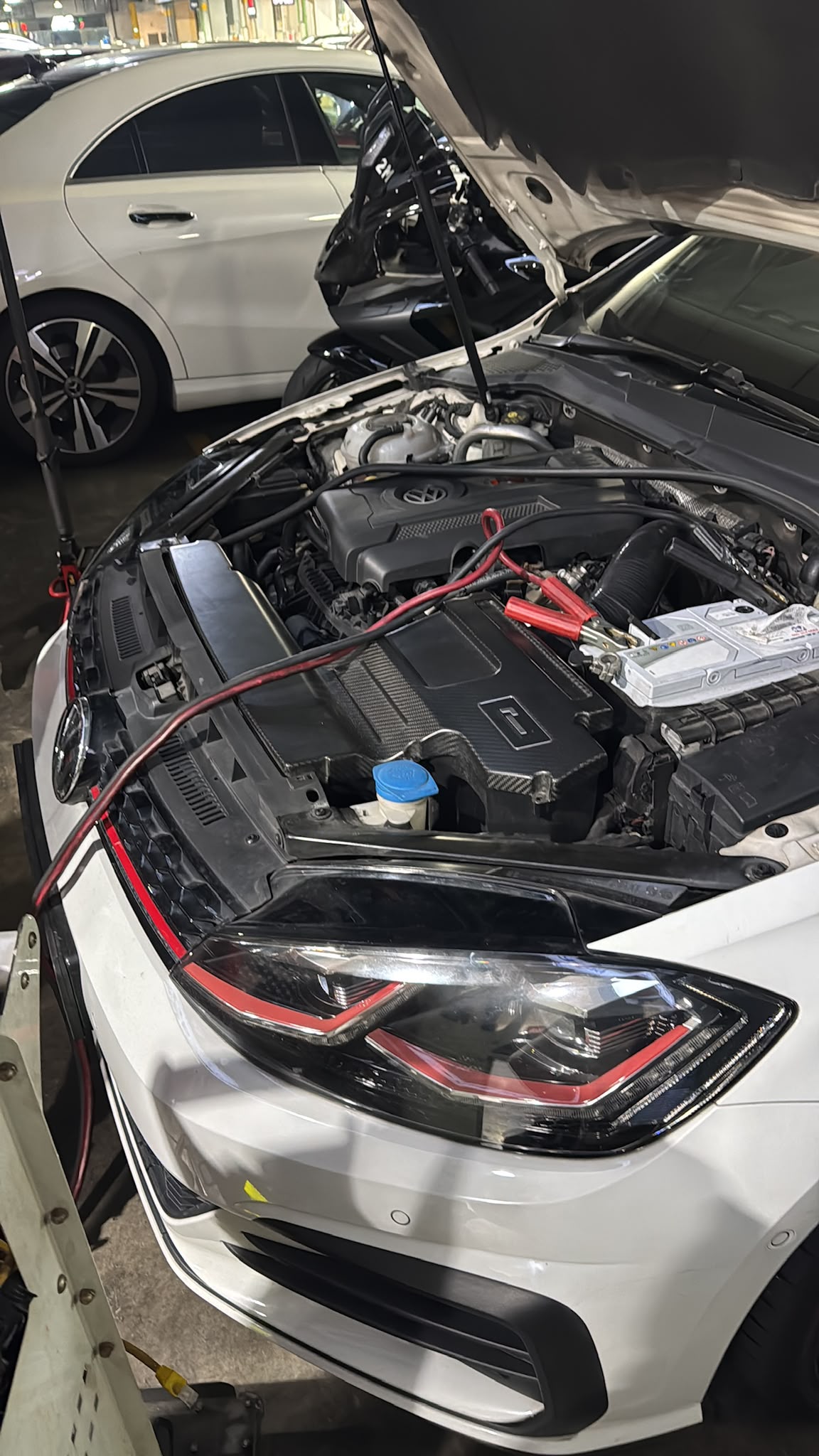
Common repair costs on older Audis
Past 80,000km, these are the jobs that start appearing. Independent workshop prices:
| Repair | Why it happens | Cost from |
|---|---|---|
| Carbon clean / walnut blast (EA888) | Direct injection design, oil vapour buildup | S$380 |
| S tronic / DSG service | “Lifetime” fluid that degrades | S$480 |
| Timing chain kit (EA888 gen 1) | Weak tensioner in early builds | S$2,200 |
| Thermostat and housing (2.0 TFSI) | Plastic housing cracks around 100,000km | S$520 |
| Coolant flange / coolant pipe leak | Heat cycling degrades plastic fittings | S$380 |
| PCV / crankcase ventilation valve | Fails around 80,000km, causes oil leaks and rough idle | S$320 |
| Rear differential service (quattro) | “Lifetime” fill that degrades | S$220 |
| Haldex service (older Q5/Q7) | Filter blocks, pump degrades | S$320 |
| Front lower control arms | Bushes and ball joints wear out | S$780 per pair |
| Air suspension compressor (Q7, A6, A8) | Common failure above 100,000km | S$980 |
| Fuel injectors (2.0 TFSI high-pressure) | Carbon causes injector tip fouling | S$380 per injector |
The jobs that turn into big bills are almost always the ones that were flagged and ignored six months earlier. A good workshop tells you what’s coming. What you do with that information is up to you.
Does independent servicing void your Audi warranty?
No, and it’s the same answer for Audi as it is for BMW and Mercedes.
Under Singapore’s Competition Act, and consistent with the Block Exemption principles Volkswagen Group applies globally, your manufacturer warranty stays valid as long as the workshop uses parts that meet OEM specification, follows the service schedule, and documents the work properly. That’s it. There’s no clause anywhere that requires servicing at an authorised centre.
Audi dealers occasionally tell customers otherwise. If one tells you this, ask them to show you the clause in writing. They won’t produce it, because it doesn’t exist.
Keep your invoices, parts receipts, and the VCDS scan report from every service. That paper trail is your protection.
How to compare Audi service quotes
A low number on a quote doesn’t mean good value. Four things to check before you book.
First: does the workshop have VCDS or ODIS access? VCDS is the specialist diagnostic tool for all VW Group vehicles, including Audi. (Why generic scanners miss faults that VCDS catches.) Without it, a workshop can’t reset service intervals after an oil change, code replacement parts, or run adaptation procedures. A generic OBD scanner won’t cut it for anything beyond reading basic fault codes.
Second: are parts itemised with brand names? “Oil filter” is not an answer. “Mann W 811/80 filter with Castrol Edge Titanium 5W-30 VW 504.00” is. If the quote doesn’t name the parts, ask before you approve anything.
Third: will they send photos during the job? Any serious workshop documents what comes off the car, especially on brake jobs. If they can’t or won’t, that tells you something.
Fourth: is labour charged per job or per hour? Per-job pricing is fairer for predictable work like oil services and brake pads. Per-hour makes more sense for diagnostics and complex repairs. Know which model you’re being quoted under.
If you get a dealer quote and want a second opinion, WhatsApp it to us at +65 9339 2769. We’ll go through it and tell you what’s needed and what isn’t.
TEC AUTO Audi pricing at a glance
| Service | From |
|---|---|
| Oil service, 2.0 TFSI (A4/A5/Q5) | S$260 |
| Oil service, 3.0 TFSI V6 (Q7/S-line) | S$380 |
| Major service, 2.0 TFSI | S$820 |
| Major service, 3.0 TFSI | S$1,050 |
| Front brake pads + discs | S$580 |
| Rear brake pads + discs | S$480 |
| S tronic / DSG gearbox service | S$480 |
| Carbon clean / walnut blast (EA888) | S$380 |
| Timing chain kit (B8 EA888 gen 1) | S$2,200 |
| Haldex coupling service | S$320 |
| Rear diff service (quattro) | S$220 |
| VCDS full diagnostic scan | S$120 (free with any service) |
| Pre-purchase inspection | S$280 |
All prices are starting points. Final quote depends on the model, engine, and parts chosen. WhatsApp your licence plate or VIN to +65 9339 2769 and we’ll send a written quote the same working day.
Summary
Audi servicing in Singapore costs real money, but not what the main dealer charges. An independent specialist with VCDS access, proper VW Group-spec parts, and a documented service record will typically save you 30–40% on labour without touching your warranty.
The real saving, though, is catching things early. The S tronic fluid that never gets changed. The carbon deposits building up on the intake valves of every TFSI engine. The timing chain rattle on early B8s that gets dismissed as normal cold-start noise until it isn’t. A workshop that knows these cars finds these things before they become invoices.
Ready for a second opinion on a quote, or want a price on your next Audi service? WhatsApp us at +65 9339 2769. Workshop at 60 Jln Lam Huat #04-61, Carros Centre, Woodlands. Mon–Fri 9am–6pm, Saturday 9am–4pm.
Frequently Asked Questions
How much does an Audi oil service cost in Singapore?
An Audi oil service in Singapore costs S$260–S$380 at a reputable independent specialist, or S$450–S$650 at the main dealer in 2026. The price varies based on engine size (2.0 TFSI vs 3.0 TFSI V6) and the oil specification required.
How often should I service my Audi in Singapore?
Audi recommends servicing every 15,000km or 12 months, whichever comes first. In Singapore’s stop-start traffic and heat, sticking to 12,000km intervals gives the engine better protection, particularly on TFSI direct injection models where oil quality affects carbon buildup rate.
What is carbon buildup and does my Audi have it?
Carbon buildup affects all TFSI direct injection engines, including the 2.0 TFSI EA888 in the A4, A5, and Q5. Because fuel is injected directly into the cylinder rather than through the intake port, oil vapour bakes onto the intake valves over time. By 60,000–80,000km it’s typically significant enough to cause rough idle and power loss. A walnut blast at an Audi specialist costs from S$380 and takes around 3–4 hours.
Does the S tronic / DSG really need to be serviced?
Yes. Audi calls it a “lifetime fill” but the fluid degrades, particularly in Singapore’s conditions. We recommend changing it every 60,000–80,000km. The service costs S$480–S$560. Skipping it risks mechatronic unit failure, which runs S$5,000–S$8,000 to fix.
Will my Audi warranty be voided if I service at an independent workshop?
No. Under Singapore’s Competition Act and VW Group’s Block Exemption policy, your warranty stays valid at any workshop using genuine-quality parts and following the manufacturer’s service schedule. Keep invoices, parts receipts, and scan reports for every service.
What is VCDS and why does it matter for Audi servicing?
VCDS (VAG-COM Diagnostic System) is the specialist software for all VW Group vehicles, including Audi. It’s needed to reset service intervals after an oil change, code replacement parts, run adaptation procedures, and read detailed fault data that generic OBD scanners miss. A workshop without VCDS can’t service your Audi beyond the basics.
Is the timing chain a problem on Audi Q5 and A4?
On B8-generation A4, A5, and Q5 models (2008–2013) with the first-generation EA888 2.0 TFSI, yes. The timing chain tensioner was a known weak point. A cold-start rattle is the main warning sign. Later gen 2 and gen 3 EA888 engines (post-2013) have a revised design and are far less prone to the issue. If you own or are buying a B8-generation car, a pre-purchase inspection with a VCDS scan and cold-start check is worth doing.