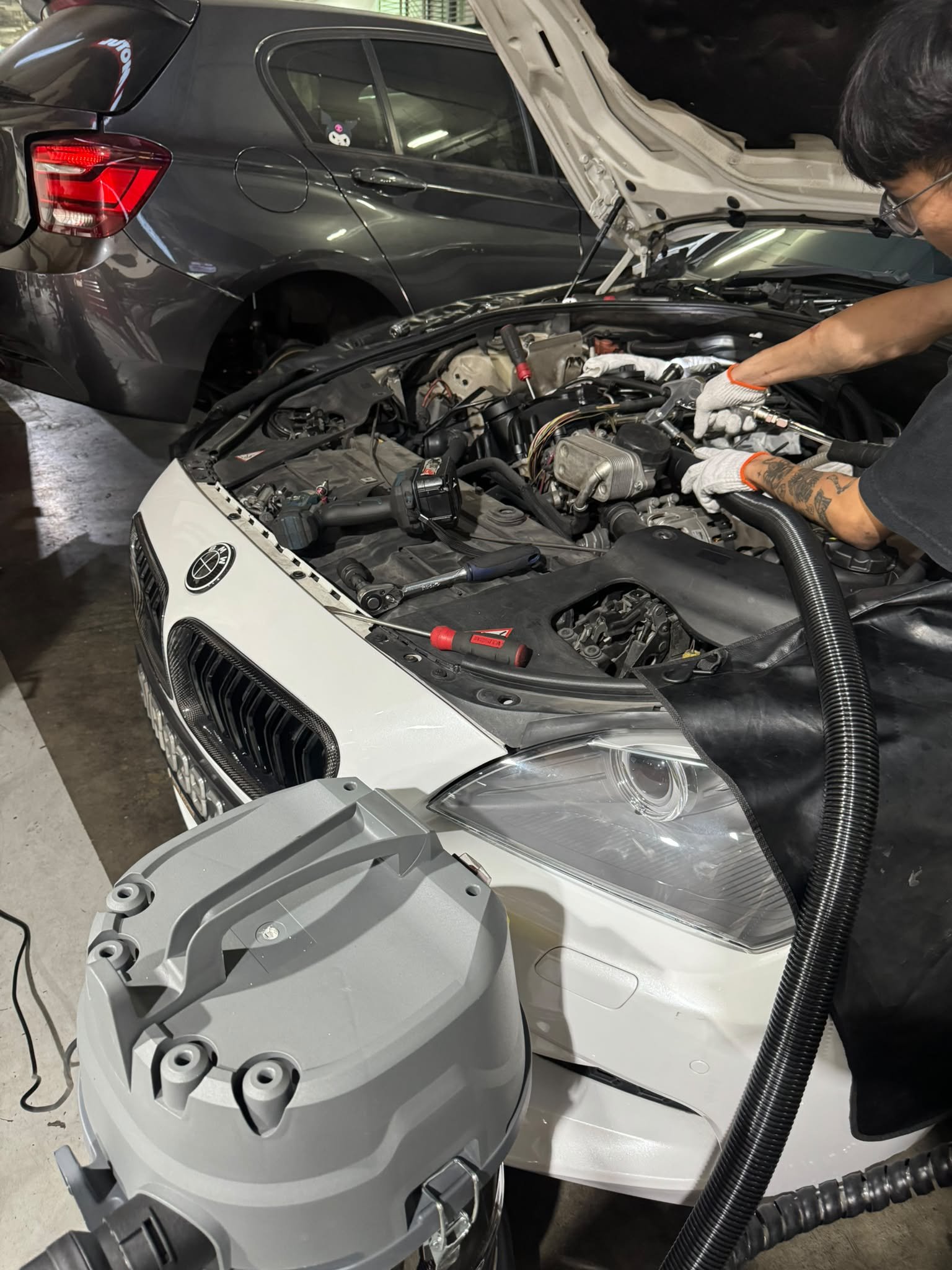
If your European car idles rough, hesitates when pulling away or uses more fuel than it used to, carbon is a likely cause. At TEC AUTO, we offer walnut blasting and injector cleaning in Singapore for BMW, Mercedes-Benz, Audi, Volkswagen and Porsche, and we diagnose first so you only pay for what your engine needs.
Walnut blasting and injector cleaning both deal with carbon in direct-injection engines, which most European cars on Singapore roads now use. But they fix different parts of the engine. Here’s how to tell them apart.
Why Direct-Injection Engines Build Up Carbon
Most modern European petrol engines use direct injection. Fuel sprays straight into the cylinder instead of into the intake port. That makes the engine more efficient, but it has two side effects:
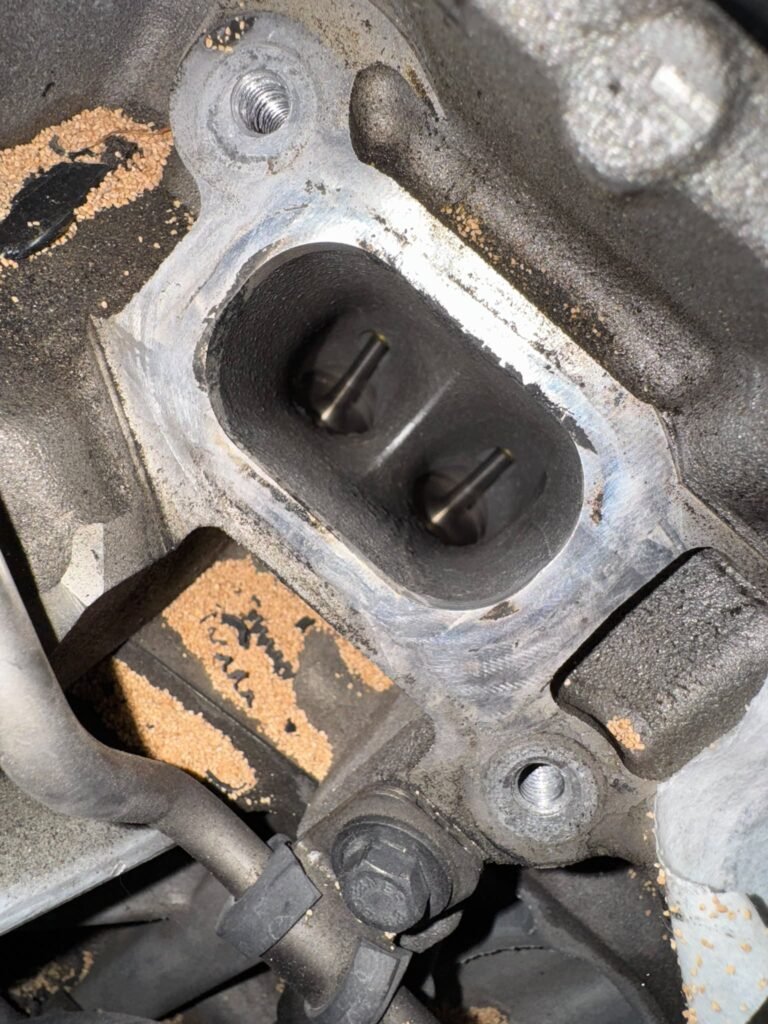
- The intake valves never get washed by fuel. Oil vapour from the crankcase ventilation bakes onto them and hardens into carbon.
- The injector tips sit inside the combustion chamber. Heat and combustion deposits slowly build up on them and disturb the spray pattern.
Singapore driving makes both worse. Short trips, stop-start traffic and lots of idling mean the engine rarely runs hot and hard enough to burn deposits off.
QUICK GUIDE
Walnut Blasting vs Injector Cleaning: Which Does Your Car Need?
| Walnut blasting | Injector cleaning | |
|---|---|---|
| What it cleans | Carbon on the back of the intake valves | Deposits on and inside the fuel injectors |
| Main symptoms | Rough idle, cold-start misfires, flat spot when pulling away, slow loss of power | Misfires under load, hesitation, uneven running, higher fuel use |
| How it’s done | Intake manifold off, crushed walnut shells blasted onto the valves, then vacuumed out | Injectors tested, then cleaned where possible or replaced if worn or leaking |
| Do fuel additives help? | No. Fuel never touches the intake valves on a direct-injection engine. | Partly, as prevention. They won’t fix a clogged injector. |
Not sure which one? The symptoms overlap, so we check before we clean.
Walnut Blasting in Singapore: How It Works
Walnut blasting uses finely crushed walnut shells, blown in with compressed air, to strip carbon off the intake valves. The shells are hard enough to remove baked-on carbon but softer than metal, so they don’t damage the valves or valve seats. We do each port with its valves closed, then vacuum out every bit of media before the intake manifold goes back on.
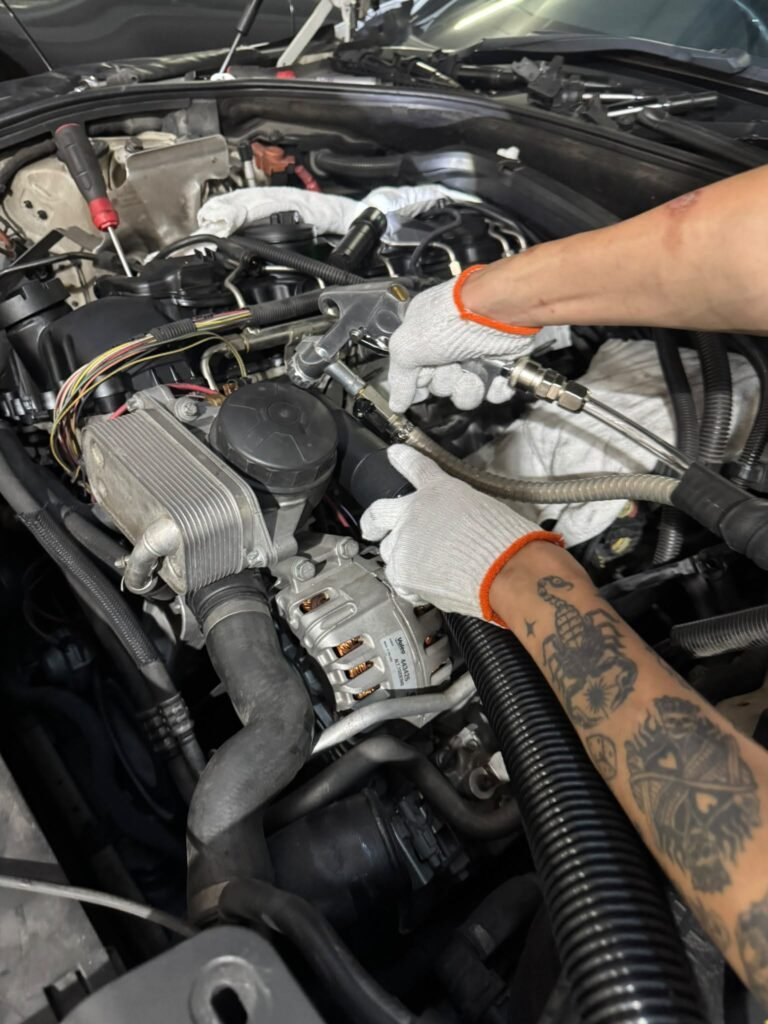
For BMW engines and costs in detail, read our BMW walnut blasting guide.
Engines that commonly need walnut blasting
- BMW and MINI: N20, N54, N55 and N63, plus the newer B38, B48 and B58 engines (see below)
- Mercedes-Benz: direct-injection petrol engines such as the M270 and M274
- Audi and Volkswagen: 2.0 TFSI/TSI (EA888) engines, especially earlier versions without extra port injection
- Porsche: direct-injection engines, including the units in the Macan and Cayenne
BMW OWNERS, READ THIS
Why It Matters Even More on BMW B-Series Engines (B38, B48, B58)
BMW’s B-series engines power most BMWs and MINIs sold since around 2015: the B38 three-cylinder, the B48 four-cylinder and the B58 six-cylinder. You’ll find them in the 1 Series, 3 Series (320i, 330i, M340i), 5 Series, X1, X3, X5 and MINI Cooper S. Many owners assume a newer engine won’t carbon up. However, B-series engines are, if anything, more sensitive to it.
| B-series feature | Why it matters for carbon and injectors |
|---|---|
| Direct injection only | There’s no port injection to wash the intake valves, so they carbon up just like the older N20 and N55. |
| 350 bar injectors (TU engines) | From 2018, the updated B48 and B58 engines raised injection pressure from 200 to 350 bar with finer injectors. Finer nozzles mean even small deposits can disturb the spray. |
| Petrol particulate filter | Newer versions such as the B58TU add a particulate filter. Misfires and poor fuel spray create extra soot and unburnt fuel, which can clog the filter and damage the catalytic converter. |
| Long service intervals | Condition-based servicing can stretch oil changes out. Older oil produces more vapour, and that vapour is what bakes onto the valves. |
| Stop-start in city traffic | The engine switches off and on constantly in Singapore traffic, so it rarely gets hot enough to burn deposits off. |
Timing matters too. B-series BMWs registered from around 2016 to 2019 are now reaching 80,000 to 100,000 km, which is exactly when carbon symptoms usually start. Catching it early costs far less than replacing a catalytic converter or particulate filter damaged by misfires later.
Injector Cleaning in Singapore: When It Helps
Direct injectors work at very high pressure through tiny holes. When deposits build up on the tip, the spray pattern changes and fuel no longer atomises properly. The result is uneven running, misfires and wasted fuel.
Signs your injectors need attention
- Misfire fault codes, often on one cylinder
- Hesitation or jerking when you accelerate
- Rough running at idle or light throttle
- Higher fuel consumption than usual
- Fuel smell or black smoke, which can mean a leaking injector
Cleaning or replacement?
Not every injector can or should be cleaned. A clogged injector often recovers after cleaning. However, a leaking or electrically faulty injector needs replacing. Also, some high-pressure piezo injectors on certain BMW and Mercedes-Benz engines are usually replaced rather than cleaned. We test first and tell you which applies to your car.
How We Diagnose Before We Clean
Carbon and injector problems share symptoms with worn ignition coils, spark plugs, vacuum leaks and sensor faults. So we start with the manufacturer’s own diagnostic software: ISTA for BMW, XENTRY for Mercedes-Benz, and ODIS or VCDS for Audi and VW. We read misfire counters and injector correction values cylinder by cylinder. Where needed, a borescope camera shows the state of the intake valves before we commit to the job.
Then you get a clear answer: walnut blasting, injector work, both, or something else entirely. Read more about why we use ISTA on every BMW.
How Often Should You Do Walnut Blasting and Injector Cleaning?
There’s no fixed interval. As a guide, check the intake valves at around 80,000 to 100,000 km on a direct-injection engine, or sooner if the car mostly does short city trips. Injectors don’t need routine cleaning; have them checked when symptoms appear, and at every major service.
To slow carbon buildup, keep to sensible oil-change intervals with the right oil spec, and give the car a longer expressway run every now and then.
Walnut Blasting and Injector Cleaning Singapore FAQ
A cleaning method that uses crushed walnut shells to remove carbon from the intake valves of direct-injection engines, without taking the engine apart.
Yes. B-series engines use direct injection only, so fuel never washes the intake valves. Carbon builds up just as it does on older BMW engines, usually showing from around 80,000 km.
Yes, if the injectors are clogged but otherwise healthy. Leaking or electrically faulty injectors need replacing instead.
No. On a direct-injection engine, fuel never touches the intake valves, so additives can’t reach that carbon. They can help keep injectors clean.
Not always. Some cars need one, some need both. A diagnostic check shows which.
On most cars it’s a few hours of work, depending on the engine.
Mainly direct-injection petrol engines, which covers most modern BMW, Mercedes-Benz, Audi, Volkswagen and Porsche models.
Walnut Blasting & Injector Cleaning at TEC AUTO
We do walnut blasting and injector cleaning for BMW, MINI, Mercedes-Benz, Audi, Volkswagen and Porsche at our Singapore workshop in Carros Centre, Woodlands. Every job starts with a proper diagnosis, and you see the findings before any work begins.
Visit us at 60 Jln Lam Huat #04-61, Carros Centre, Woodlands. We’re open Monday to Friday 9am to 6pm, and Saturday 9am to 4pm. WhatsApp +65 9339 2769 with your car model, year and mileage, and we’ll tell you what to expect.